



Keynote speakers
New Communications and Security Capabilities with Curving Beams
Wednesday, June 17, 10:45 - 11:30

Short Biography
Edward Knightly is the Sheafor–Lindsay Professor of Electrical and Computer Engineering and Computer Science at Rice University. He received his Ph.D. and M.S. from the University of California at Berkeley and his B.S. from Auburn University. He is an ACM Fellow, IEEE Fellow, and Sloan Fellow. He received the IEEE INFOCOM Achievement Award, the Dynamic Spectrum Alliance Award for Research on New Opportunities for Dynamic Spectrum Access, the George R. Brown School of Engineering Teaching + Research Excellence Award, and the National Science Foundation CAREER Award. He received the 2025 ACM SIGMOBILE Test of Time paper award and eight best paper awards including ACM MobiCom, ACM MobiHoc, IEEE Communications and Network Security, and IEEE INFOCOM.
Abstract
In 1979, "Airy" beams were first theorized to curve without violating Maxwell's equations. Today, these curving beams represent a promising approach to overcoming the obstacle avoidance problem in highly directional communications. In this talk, the world's first experimental demonstration of a curving communications link will be presented. Then, new security threats associated with this technology will be introduced. In particular, it will be shown how an adversary using a curving beam to jam a communications link prevents the victim from accurately localizing the source. Consequently, standard countermeasures such as directional nulling will fail. Finally, open research challenges in both security and communications will be discussed.
A proposal of support for mobile networks resilience during emergency situations- Montenegro case study
Wednesday, June 17, 13:45 - 14:30
Short Biography
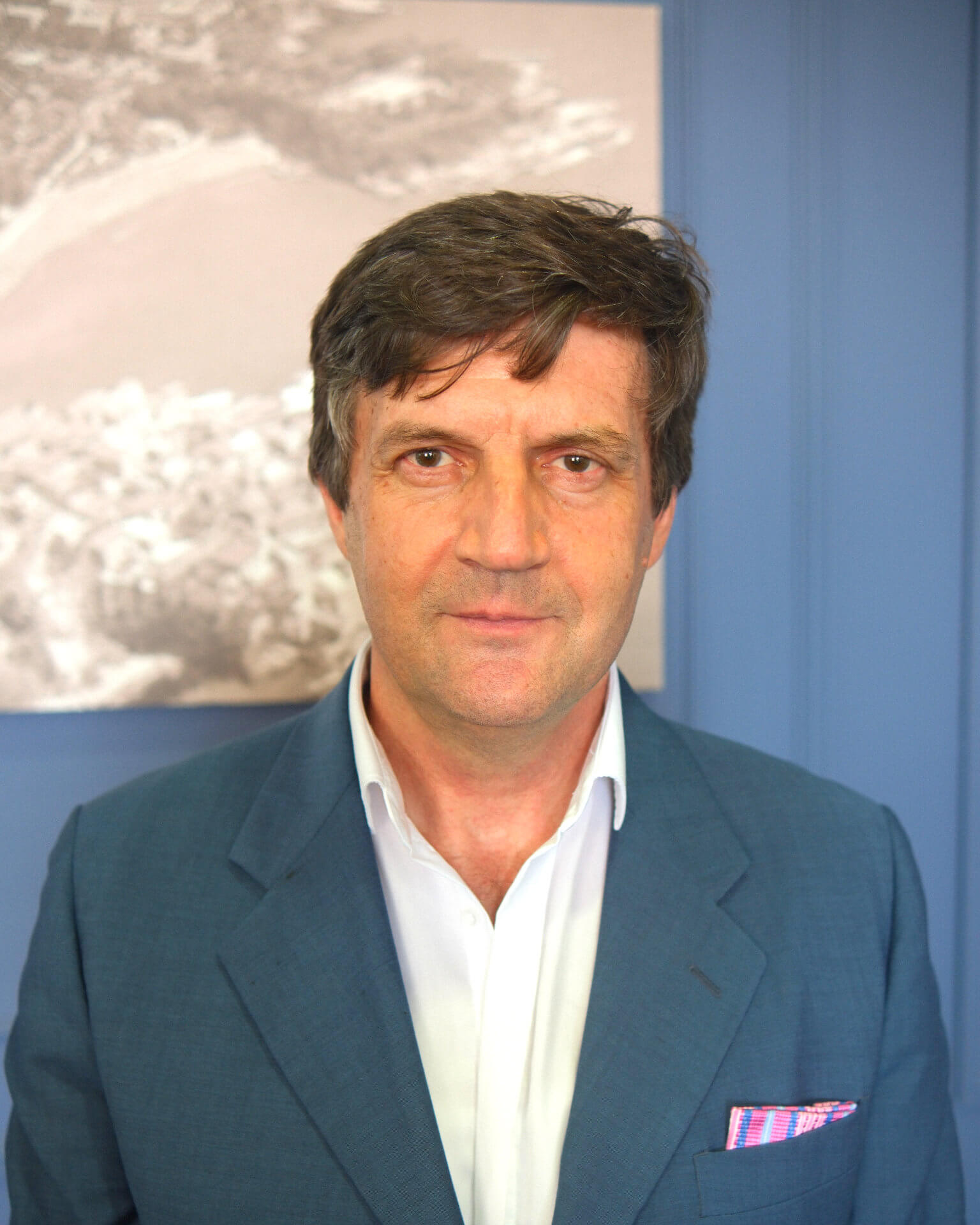
Dr. Milan B. Radulović received his degree in Electrical Engineering from the University of Montenegro, specializing in Electronics, and his Ph.D. in Computer Architecture from the University of Belgrade. Throughout his career, he has held engineering, research, and leadership positions at the University of Montenegro, Crnogorski Telekom, and Ericsson Montenegro, working in the fields of telecommunications, computer networks, mobile core systems, software and hardware development, robotics, artificial intelligence, and high-performance computing. He has participated in numerous national and international research and development projects and has been a visiting researcher at the University of Warwick (UK), the University of Granada (Spain), the University of Siena (Italy), and EPFL Lausanne (Switzerland). Dr. Radulović has authored multiple scientific publications in international journals and conferences and is a member of HiPEAC (European Network of Excellence on High Performance and Embedded Architecture and Compilation). Since April 2024, he has served as President of the Council of the Agency for Electronic Communications and Postal Services of Montenegro.
Abstract
When disaster strikes, communications infrastructure is often among the first casualties, and the first thing people need to function again. Earthquakes, floods, wildfires, and other catastrophic events can severely degrade mobile transport networks, limiting the ability of authorities and citizens to communicate exactly when it matters most. Public Warning Systems (PWS), especially those built on Cell Broadcast technology, have proven highly effective at delivering life-saving information while avoiding network congestion and ensuring rapid alert dissemination. In this keynote, a case study from Montenegro will be presented, exploring the use of the national broadcasting operator's transport infrastructure as a shared emergency redundancy platform for mobile network operators. The approach leverages the existing Broadcasting Centre's (RDC) microwave network, site infrastructure, and power systems to provide an alternative backhaul path for priority voice, SMS, data, and PWS traffic when mobile operators' own networks become unavailable. An assessment of the resilience mechanisms used by Montenegro's three mobile operators will be discussed, together with simulation-based coverage analyses evaluating the solution's potential effectiveness. Results show that a significant share of the population and territory could remain served, particularly when combined with national roaming and extended autonomous power operation. The talk will also touch on cost-benefit trade-offs and the broader potential for infrastructure sharing to strengthen national disaster preparedness.
Enabling Next 6G Systems through Energy-Efficient, Scalable Design and Spectrum Coexistence
Thursday, June 18, 10:45 - 11:30
Short Biography
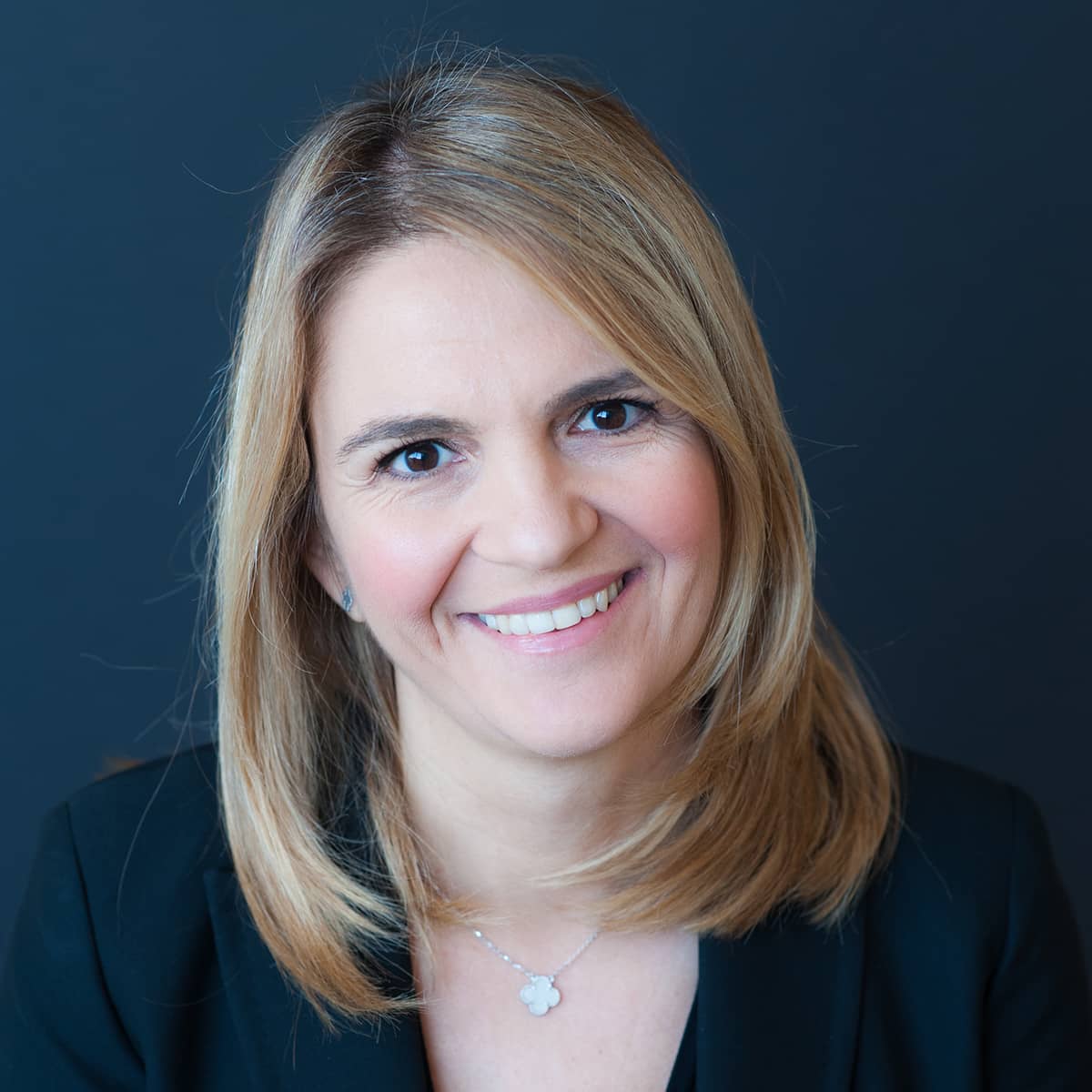
Danijela Cabric is a Professor in the Electrical and Computer Engineering Department at the University of California, Los Angeles. She received M.S. from the University of California, Los Angeles in 2001 and Ph.D. from University of California, Berkeley in 2007, both in Electrical Engineering. In 2008, she joined UCLA as an Assistant Professor, where she heads Cognitive Reconfigurable Embedded Systems lab. Her current research projects include novel radio architectures, signal processing, communications, machine learning and networking techniques for spectrum sharing, millimeter-wave, massive MIMO and IoT systems. She is a principal investigator in the three large cross-disciplinary multi-university centers including SRC/JUMP ComSenTer and CONIX, and NSF SpectrumX. Prof. Cabric was a recipient of the Samueli Fellowship in 2008, the Okawa Foundation Research Grant in 2009, Hellman Fellowship in 2012, the National Science Foundation Faculty Early Career Development (CAREER) Award in 2012, and Qualcomm Faculty Awards in 2020 and 2021. Prof. Cabric is an IEEE Fellow.
Abstract
Each generation has taken a big step forward and introduced new technologies in order to increase the performance of networks and devices to support the constantly enriched services. In 5G, the telecommunications industry has been particularly focused on improving user experiences such as data rates and latency. However, 6G key objectives have significantly shifted. Operators are requesting improvement of operating costs, energy efficiency, access to mid-spectrum while embedding and leveraging AI/ML technology. This talk will discuss technologies and architectures for energy-efficient mobile and fixed wireless access using new antenna array designs, beamforming modes, ultra-wideband multiple access, and scalable processing architectures to support different coverage and connectivity requirements in 6G cellular and massive IoT connectivity. It will also explore solutions for enabling spectrum sharing in mid-band spectrum between cellular networks and incumbents including radars and satellites.
Securing the Invisible Backbone: AI-Powered Detection of Physical-Layer Breaches in Optical Networks
Friday, June 19, 11:45 - 12:30

Short Biography
Marija Furdek is an associate professor at Chalmers University of Technology in Gothenburg, Sweden. She obtained her PhD and MSc degrees from the University of Zagreb, Croatia. She was a senior researcher at KTH Royal Institute of Technology in Stockholm, Sweden in 2013-2019. Marija is the director of the Fiber Optic Communication Center (FORCE) at Chalmers. She has been a PI and WP leader of research projects funded by the EU, the Swedish Research Council, and Swedish innovation agency VINNOVA. Marija is a Senior Member of Optica and IEEE, and was an IEEE ComSoc Distinguished Lecturer 2023-2024. She was co-recipient of nine best paper awards. She has been an editor of IEEE/Optica Journal of Optical Communications and Networking, TPC Co-Chair of EuCNC & 6G Summit 2023, chair of ECOC subcommittee SC 10 (‘Control and management of optical networks’) 2024-2025 and TPC member of OFC SC N3 (‘Architectures and Software-Defined Control for Metro and Core Optical Networks’) 2023-2026.
Abstract
Optical networks form the invisible backbone of global connectivity, carrying vast volumes of critical data across continents and oceans. As these infrastructures become increasingly vital, they are also growing targets for sophisticated physical-layer attacks aimed at eavesdropping and service disruption. In this keynote, advanced AI-driven techniques designed to detect and identify physical-layer breaches in optical networks will be presented. We will explore how machine learning models can distinguish malicious perturbations from normal signal variations, despite the complexity of optical transmission systems. The talk will address key challenges, including environmental noise, equipment heterogeneity, limitations of current monitoring technologies, and the continuously evolving threat landscape. Attendees will gain insights into how AI enables proactive, scalable, and intelligent protection of next-generation optical infrastructure — moving from reactive monitoring to predictive security.